
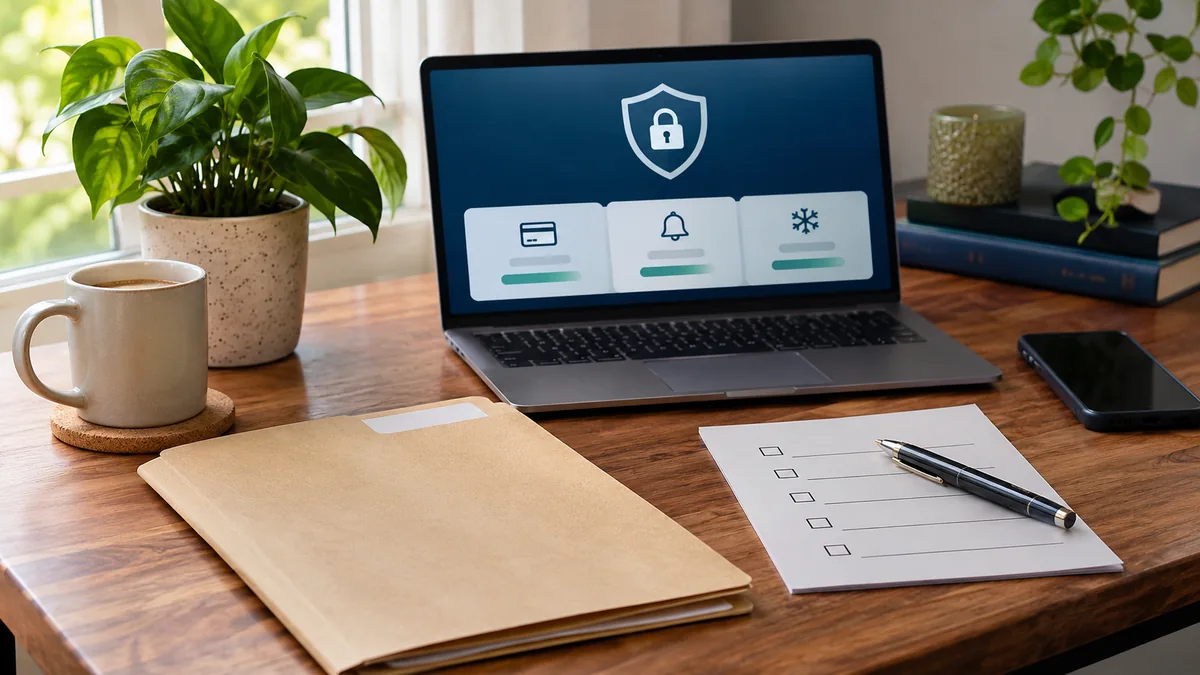
Credit monitoring can help you notice an unfamiliar account, inquiry, or balance change, but it cannot prevent every form of identity theft. The most useful decision is not simply which service to buy. It is which combination of free reports, account alerts, credit freezes, and—only when needed—paid monitoring fits your actual risk. This U.S.-focused guide explains what monitoring does, what it misses, how to compare plans without paying for redundant features, and what to do when an alert arrives.
Table of Contents
What credit monitoring actually watches
A credit monitoring service checks one or more credit reports for changes and sends notifications. Depending on the provider and plan, these may include new credit accounts, hard inquiries, reported balances, address changes, or public-record-related updates. The alert is a signal to investigate, not proof that fraud occurred. A legitimate credit application, account update, or reporting correction may trigger it.
Coverage is uneven. A service that watches only one of the three nationwide credit bureaus may miss activity first reported to another. Some services add identity monitoring, dark-web alerts, or insurance-like assistance, but those are separate features with different limitations. The Consumer Financial Protection Bureau cautions that monitoring usually detects changes after the fact rather than preventing personal information from being stolen.
Think of monitoring as a smoke alarm, not a lock. It can shorten the time between an unusual report change and your response. It cannot guarantee that every misuse of your identity will appear in a credit file or that a fraudulent account will never open.
Credit monitoring versus a credit freeze and fraud alert
A security freeze restricts access to your credit file for many new-credit decisions. Under federal law, placing and lifting a freeze at each of the three nationwide bureaus is free, and it does not lower your credit score. You normally need to lift a freeze temporarily before applying for new credit. A freeze is often a stronger preventive step against new-account fraud than paying for monitoring alone, although it does not stop misuse of existing accounts.
A fraud alert tells prospective lenders to take additional steps to verify identity. An initial fraud alert is free and generally lasts one year; you can place it by contacting one nationwide bureau, which must notify the other two. It is less restrictive than a freeze and does not guarantee that every fraudulent application will be rejected. The FTC comparison explains eligibility and the different alert types.
A paid credit lock is not the same legal product as a free security freeze. Read the terms carefully before paying for a feature that duplicates a protection available at no cost. The CFPB freeze explainer notes that credit locks may be bundled with subscription services.
A practical free-first protection stack
Start with your own credit reports. U.S. consumers can currently obtain free weekly online reports from each nationwide bureau through the federally authorized AnnualCreditReport.com. Checking your own report does not harm your credit score. Look for accounts you do not recognize, unfamiliar addresses, incorrect payment histories, and inquiries that need explanation. Compare all three reports because lenders do not necessarily report to every bureau.
Next, turn on transaction and login alerts from banks and card issuers, use unique passwords and multifactor authentication, and secure your email account. These measures can surface activity on existing accounts that a new-account credit freeze may not stop. If you are not planning to apply for credit soon, consider freezing your files at all three bureaus and store the unfreeze instructions securely.
Finally, choose a realistic review cadence. A ten-minute check of financial-account notifications each week and a scheduled review of credit reports can be more sustainable than constant app checking. For a broader system, use the personal finance documents checklist to keep the relevant records organized without putting passwords or identity numbers into a shared spreadsheet.
Free monitoring versus paid plans: what you are buying
A free tier may offer basic alerts or a credit-score dashboard, while a paid plan may monitor more bureaus, bundle identity-theft assistance, or offer additional notifications. Neither price nor a dramatic marketing promise proves better protection. Ask which bureaus are covered, which changes trigger alerts, how quickly they are sent, whether you can export your history, and what happens after cancellation.
Read the exclusions for identity restoration, reimbursement, or insurance benefits. Such features may have deductibles, documentation requirements, claim limits, and eligibility conditions. They are not substitutes for preventing fraud, and they do not make you immune to loss. Also check whether the provider requires a trial that converts to a subscription, and whether a free offer is tied to a data breach.
The CFPB advises checking hidden fees and cancellation requirements before accepting a so-called free offer. Compare total annual cost rather than the headline monthly price. For example, a hypothetical $12 monthly subscription costs $144 over twelve months before taxes; the question is whether its specific incremental benefits are worth that expense given free alternatives.
Feature comparison checklist
Use the table below as a decision framework, not a ranking of brands. Providers change coverage and pricing, so verify current terms directly. A three-bureau alert plan may add convenience, but a person already using free reports and freezes may reasonably decide that paid monitoring adds little value.
Before entering sensitive details, verify the provider’s domain and privacy notice. Be wary of a site that mimics the authorized free-report service, requests unnecessary account credentials, or uses urgent countdowns to push a purchase. The FTC warns about imitation free-report websites and advises starting at the authorized source.
| Approach | Main value | Important limitation | Typical cost |
|---|---|---|---|
| Free weekly reports | Review existing file details | Requires your own review | Free through authorized source |
| Security freeze | Restricts many new-credit checks | Does not stop existing-card misuse | Free |
| Fraud alert | Extra identity verification signal | Does not block all applications | Free |
| Paid monitoring | Convenient change notifications | Mostly detects after reporting | Varies by provider |
How to respond to an unfamiliar credit alert
First, do not click a link in a surprising email or text. Open the credit bureau or financial institution using an independently verified app or website. Read the alert details, identify the bureau, and check whether a recent legitimate application or account change explains it. Keep a dated note of what you found without sharing full account numbers.
If an account or inquiry looks fraudulent, consider freezing your credit at all three bureaus and placing an appropriate fraud alert. Contact the lender’s fraud department using a verified number. Review your reports for other unfamiliar entries and follow the recovery steps at IdentityTheft.gov. If credentials may be compromised, change passwords and secure the affected email and bank accounts promptly.
If the issue is inaccurate reporting rather than identity theft, dispute it with the credit bureau and the furnisher. Save copies of correspondence and supporting records. Our credit report dispute checklist explains how to document an error without relying on a paid credit-repair promise.
What monitoring does not protect
Monitoring is not an all-purpose fraud shield. It may not detect unauthorized use of a debit card, a stolen tax refund, medical identity theft, a compromised social account, or a phishing attack. It may also miss changes at a bureau that the service does not watch. Alert delays can occur because creditors report at different times.
A credit freeze mainly addresses access to files for new credit; it does not freeze your bank account or stop charges on an existing card. A credit score app may show one scoring model and one bureau, not the exact score a particular lender will use. For fundamentals, see our separate guide to credit score factors and utilization.
Avoid claims that a service will raise your score merely because you subscribe. Monitoring and scoring are different functions. Correcting a genuine report error may change a score, but no monitoring plan can promise a particular point increase or lending decision.
When paid monitoring might be worth considering
A paid plan may be convenient if you want consolidated alerts from multiple bureaus, struggle to review reports regularly, or need a clearly defined restoration service after an incident. It may also make sense when an employer or insurer offers a credible benefit at no additional cost. Compare those advantages with the same protections you can obtain free.
Someone who recently experienced identity theft may place higher value on faster notification and assistance. Someone with no immediate credit applications, a freeze at each bureau, account alerts, and a consistent review habit may see little incremental value. Neither choice is universally correct. The decision depends on your risk exposure, attention, budget, and the contract.
If a service advertises reimbursement or “protection up to” a large amount, read the exclusions and claim process. An advertised maximum is not money automatically paid to a subscriber. Keep the focus on timely detection, understandable support, and controllable costs.
A 20-minute setup plan
Minutes 0–5: identify your existing alerts and whether you have a freeze at each bureau. Do not create duplicate paid subscriptions. Minutes 5–10: request or schedule your free credit reports through the authorized service and note the date. Minutes 10–15: review unfamiliar accounts and hard inquiries, then enable alerts from your bank and card issuers. Minutes 15–20: document where to lift freezes and how to contact lenders if a problem appears.
For the following month, keep a simple log with the date, source of alert, whether it was expected, and the action taken. Do not store Social Security numbers or full card numbers in the log. If you are also paying down revolving debt, pair this review with the credit card debt payoff plan so security checks do not displace more important budget decisions.
Privacy and cancellation questions before subscribing
Read how the provider collects and shares your information, which bureaus it queries, whether monitoring continues after cancellation, and whether it retains personal data. Use a unique password and multifactor authentication if offered. If a provider asks you to hand over the password to your bank or email, understand the security implications and consider alternatives.
Check how to cancel, whether a promotional rate expires, and whether you will lose access to historical alerts or support. Keep a copy of the offer and confirmation. If a company makes unsupported guarantees, investigate complaints and avoid relying on promotional testimonials as evidence.
Revisit the decision every six to twelve months or after a material change, such as a data breach or new credit application. A tool that once offered useful support can become redundant when your needs change. Our personal finance software comparison uses a similar feature-first approach to subscriptions.
Common mistakes and a safer decision rule
The first mistake is confusing an alert with prevention. The second is paying for a “lock” while ignoring a free statutory freeze. The third is assuming that one bureau represents all three. The fourth is overlooking existing-account alerts, which are often more immediately useful for unauthorized card activity.
A fifth mistake is responding to a frightening email by clicking its embedded link. Verify the alert independently. A sixth is paying for monitoring without checking whether a free plan, employer benefit, or prior breach settlement already covers the same service. The seventh is leaving an alert unexplained because it seems minor.
A practical rule is: protect access first, monitor for changes second, and buy convenience only if you can name the benefit you need. That sequence reduces unnecessary spending while keeping the response plan clear.
Sources, limitations and next steps
This article focuses on U.S. consumer credit reporting and is general educational information, not individualized legal or financial advice. Rules, provider features, and subscription prices may change. Verify important details with the relevant bureau or official agency before acting.
Primary references: CFPB on credit monitoring, CFPB on security freezes, FTC on freezes and fraud alerts, and FTC on free credit reports.
Start by checking whether your three reports are frozen and whether you already receive useful bank alerts. Only then compare paid services against a short written list of missing features. The best setup is one you can maintain and act on when an alert arrives.
Frequently asked questions
Does credit monitoring prevent identity theft?
No. It generally notifies you about certain changes to monitored credit files after they occur. A free security freeze can help prevent new-account fraud, while bank alerts and account security address different risks.
Can I get free credit reports every week?
U.S. consumers can currently request free weekly online reports from each of the three nationwide credit bureaus through AnnualCreditReport.com. Review all three because their information may differ.
Does freezing my credit hurt my credit score?
No. Placing or lifting a security freeze is free under federal law and does not affect your credit score. You may need to lift it temporarily when applying for new credit.
Is a paid credit lock better than a free freeze?
Not necessarily. A free security freeze has statutory protections. A paid lock may offer convenience or bundled features, but review the contract and do not assume stronger protection.
What should I do after a suspicious credit alert?
Verify the alert through a trusted channel, review your credit reports, consider freezes and fraud alerts, contact the lender if an account is unfamiliar, and follow IdentityTheft.gov recovery guidance.